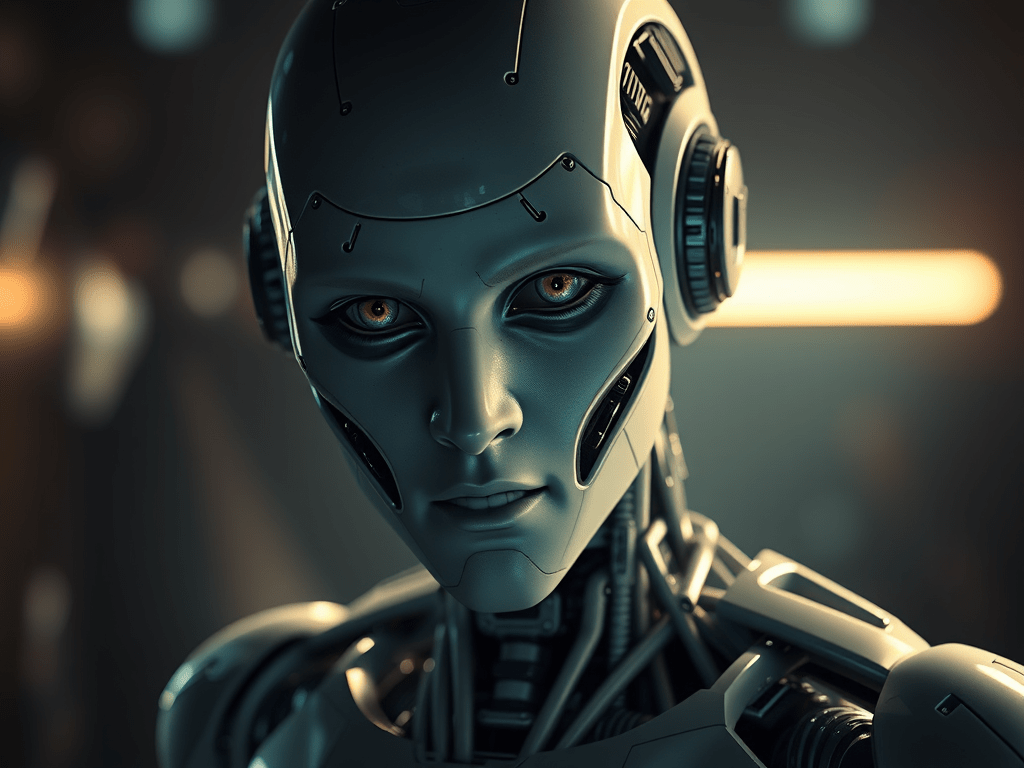
Have you ever felt a strange sense of unease when looking at a hyperrealistic robot or a CGI character that’s almost human? That’s the uncanny valley, a phenomenon that has fascinated scientists and artists for decades.
The term, coined by roboticist Masahiro Mori in 1970, describes our emotional response to artificial entities that look and act almost, but not quite, human. Imagine a robot with perfectly human features but with slightly jerky movements or a dead-eyed stare. Instead of feeling empathy or connection, we often experience revulsion, creepiness, or even fear.
Why the Valley?
Mori visualized this response as a graph. As an entity becomes more human-like, our affinity for it increases. However, there’s a point where this likeness becomes too close for comfort, and our liking plummets into a “valley” of negative emotions before climbing again towards true human likeness.
What Causes this Eerie Feeling?
While there’s no definitive answer, several theories attempt to explain the uncanny valley:
- Evolutionary Alarm Bells: Our brains may be wired to detect subtle cues of illness or abnormality. Something that looks human but moves strangely might trigger an ancient aversion response, protecting us from potential harm.
- Cognitive Dissonance: We experience a conflict between our perception of something as human and the knowledge that it’s not. This mental clash creates an uncomfortable feeling of unease.
- Broken Expectations: Entities in the uncanny valley often violate our deeply ingrained expectations of human appearance and behavior. This disruption can be unsettling and lead to negative emotions.
Where Do We See the Uncanny Valley?
The uncanny valley pops up in various places:
- Robotics: Humanoid robots, especially those designed for social interaction, often fall into the valley if their movements or expressions aren’t perfectly fluid.
- Computer Animation: CGI characters in movies and video games can trigger the effect if their rendering or animation falls short of true human likeness. Think of that slightly “off” feeling you get from some digital humans.
- Prosthetics: Even highly realistic prosthetics can evoke an uncanny feeling if they are too lifelike but still have subtle differences from real limbs.
Beyond Creepiness
The uncanny valley is more than just a creepy feeling. It has significant implications for fields like robotics, animation, and even healthcare. Understanding this phenomenon can help designers and engineers create more effective and acceptable artificial entities. By navigating the uncanny valley, we can potentially unlock the full potential of human-robot interaction and create technologies that truly benefit society.
 Muller Unlimited
Leave a comment